
How Autonomous Snow Clearing Actually Works
10/23/2026
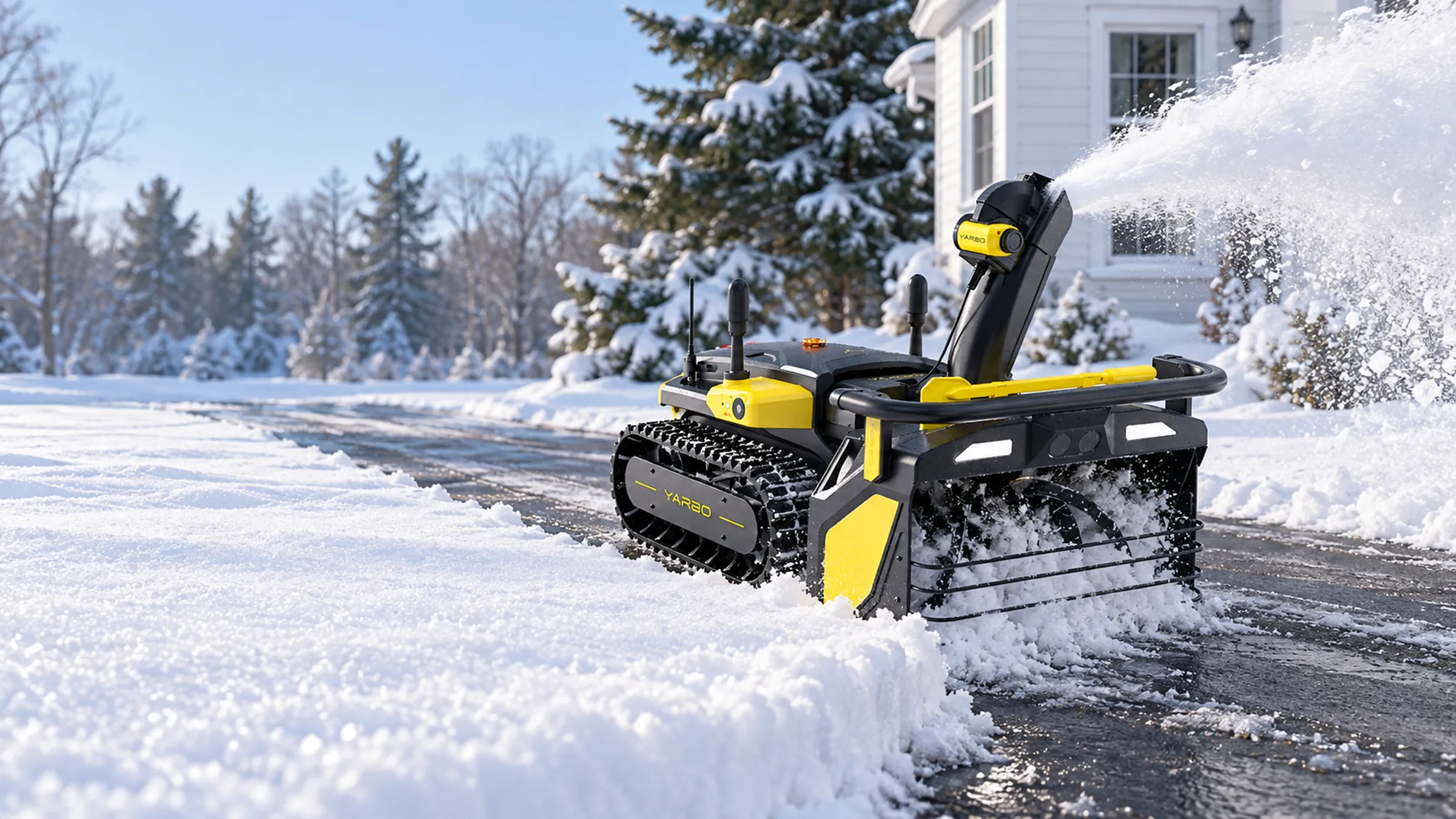
A robot that clears your driveway while you sleep sounds like a gimmick until you see the first storm handled without you. Here's what's actually going on.
It starts with mapping. During installation we drive the robot around your driveway once, building a centimeter-precise model of the surface — every edge, the garage apron, the walkway, and the flower bed you do not want buried in thrown snow. That map is what lets it work in the dark, in a whiteout, with no visible pavement edge to follow.
Navigation comes from RTK GPS, the same technology used in precision agriculture. A base station — Yarbo calls it the Data Center — sits on your property and corrects the satellite signal down to centimeter accuracy. Without it, consumer GPS drifts by several feet, which is the difference between clearing your driveway and driving through your lawn.
The clearing itself is two-stage: an auger pulls snow in and breaks it up, then an impeller throws it out through the chute. Throw distance is adjustable from 6 to 40 feet, and the chute rotates, so snow lands where you want it instead of in a pile you have to move again.
It runs through the storm rather than after it. The robot clears, returns to the dock when the battery runs low, fast-charges, and goes back out. Clearing a few inches repeatedly is far easier than fighting a two-foot drift at 6 AM — which is also why the machine can be smaller than the one-time-pass equipment a plow crew brings.
Cold is the obvious question. The Yarbo Core is rated to -13°F with IPX5 water resistance and a steel frame. New England cold is not an edge case for it.